Flint Office
1303 S. Linden Rd., Suite D
Flint, MI 48532


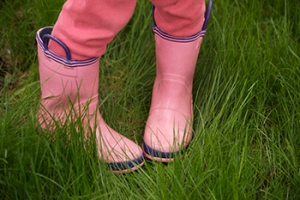

Walking irregularities in children, such as in-toeing, out-toeing, limping, and toe-walking, are fairly common and can result from various developmental factors. These patterns may develop due to natural variations in bone structure as a child grows, such as hip rotation or curved shin bones. Some children may have flat feet, loose ligaments, or muscle imbalances that contribute to unusual walking styles. Genetics, birth conditions, and early habits, like prolonged toe-walking, can also play a role. Many of these irregular walking patterns resolve as children grow and their bones and muscles strengthen. However, if your child experiences pain, frequent tripping, or if the issue persists beyond early childhood, it is suggested that a podiatrist be contacted for an evaluation. Treatment may include stretching exercises or custom orthotics to encourage normal walking patterns, and prevent long-term issues with balance and mobility.
The health of a child’s feet is vital to their overall well-being. If you have any questions regarding foot health, contact one of our podiatrists of Community Podiatry Group. Our doctors can provide the care you need to keep you pain-free and on your feet.
Tips for Keeping Children's Feet Healthy
If you have any questions, please feel free to contact our office located in Flint, MI . We offer the newest diagnostic and treatment technologies for all your foot care needs.
It is never normal for a child to experience pain in his or her feet. Foot pain that lasts more than a few days and limits a child’s ability to walk should be examined by a podiatrist. Many adult foot ailments originate in childhood and may be present at birth. Common foot issues that are experienced by children are pediatric flat foot, Sever’s disease, ingrown toenails, and plantar warts.
A child’s foot grows rapidly during the first year, allowing it to reach almost half of their adult foot size. Consequently, foot specialists consider the first year to be the most crucial point in the foot development process. There are ways you can help ensure that your child’s foot develops properly. One way is to carefully look at your baby’s feet. If you notice any deformities, you should immediately seek professional care. You should also loosely cover your child’s foot, since tight coverings may prevent movement and inhibit normal development. Another tip is to change the baby’s positioning throughout the day. If your baby lies down in one spot for too long, it may put an excess amount of strain on the feet and legs.
It is best that you try not to force a child to start walking. Children will begin to walk when they are both physically and emotionally capable to do so. You should also avoid comparing your child’s walking progress with other children because the age range for independent walking may range. When your child’s feet begin to develop, you may need to change both their shoe and sock size every few months to allow room for their feet to grow.
Kids are sometimes prone to splinters, cuts, and severe injuries because they tend to walk around barefoot. This also makes them more susceptible to developing plantar warts which is a condition caused by a virus that invades the sole of the foot through breaks in the skin. These ailments can be avoided by making sure your child wears shoes in unsanitary environments. You should also wash any minor cuts or scrapes on your child’s feet. It is a myth that exposure to fresh air will heal injuries; fresh air will only expose your child’s cuts to germs.
As a parent, you should ensure that your child’s feet are developing properly and are being properly maintained. Consequently, it is important that you perform routine inspections on his or her feet to detect any injuries or deformities in their early stages. Early detection and treatment will help to ensure that your child does not develop any serious foot conditions.


Do you suffer from heel pain when you get up in the morning? If so, you should seek professional help and have a proper diagnosis performed. Heel pain can be caused by several different foot-related conditions.
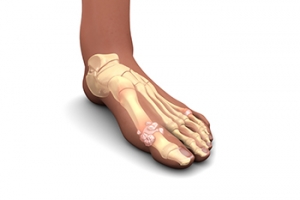

Gout is a form of arthritis caused by a buildup of uric acid crystals in the joints, most commonly affecting the big toe. It leads to sudden attacks of severe pain, redness, swelling, and tenderness. Causes include high levels of uric acid in the blood, often linked to diet and metabolism. Risk factors involve family history, obesity, kidney disease, and excessive alcohol intake. Foods to avoid include red meat, shellfish, organ meats, and sugary drinks, while foods that help include cherries, whole grains, vegetables, and low fat dairy. A podiatrist can help by diagnosing gout, managing flare ups, and offering guidance for prevention. If you have symptoms of gout, it is strongly suggested that you are under the care of a podiatrist who can help you to manage this painful condition.
Gout is a painful condition that can be treated. If you are seeking treatment, contact one of our podiatrists from Community Podiatry Group. Our doctors will treat your foot and ankle needs.
What Is Gout?
Gout is a form of arthritis that is characterized by sudden, severe attacks of pain, redness, and tenderness in the joints. The condition usually affects the joint at the base of the big toe. A gout attack can occur at any random time, such as the middle of the night while you are asleep.
Symptoms
Risk Factors
Prior to visiting your podiatrist to receive treatment for gout, there are a few things you should do beforehand. If you have gout you should write down your symptoms--including when they started and how often you experience them, important medical information you may have, and any questions you may have. Writing down these three things will help your podiatrist in assessing your specific situation so that he or she may provide the best route of treatment for you.
If you have any questions, please feel free to contact our office located in Flint, MI . We offer the newest diagnostic and treatment technologies for all your foot care needs.
Gout, typically found in diabetic patients, is an unusually painful form of arthritis caused by elevated levels of uric acid in the bloodstream. The condition typically strikes the big joint on the big toe. It has also been known to strike the knees, elbows, fingers, ankles and wrists—generally anywhere that has a functioning, moving joint.
The high level of uric acid in a person’s bloodstream creates the condition known as hyperuricema—the main cause of gout. Genetic predisposition occurs in nine out of ten sufferers. The children of parents who suffer gout will have a two in ten chance of developing the condition as well.
This form of arthritis, being particularly painful, is the leftover uric acid crystallizing in the blood stream. The crystallized uric acid then travels to the space between joints where they rub, causing friction when the patient moves. Symptoms include: pain, redness, swelling, and inflammation. Additional side effects may include fatigue and fever, although reports of these effects are very rare. Some patients have reported that pain may intensify when the temperature drops, such as when you sleep.
Most cases of gout are easily diagnosed by a podiatrist’s assessment of the various symptoms. Defined tests can also be performed. A blood test to detect elevated levels of uric acid is often used as well as an x-ray to diagnose visible and chronic gout.
Treatment for gout simply means eliminating symptoms. Non-steroid anti-inflammatory drugs or NSAIDs (Colchicine and other corticosteroid drugs, etc.) will quell the redness, the swelling, and the inflammation. However, managing your diet, lifestyle changes, and using preventative drugs are all helpful toward fully combating the most severe cases.
Those that lead an inactive lifestyle are at a higher risk for gout. Any amount of exercise decreases the probability of repeat encounters with the condition. Reducing your consumption of red meat, sea food, and fructose-sweetened drinks also reduces the likelihood of chronic gout as well.
Ingesting Vitamin C, coffee, and particular dairy products can help with maintaining a healthy lifestyle. There are new drugs out on the market that inhibit the body’s production of uric acid-producing enzymes. However, reducing or eliminating your overall levels of uric acid is the best remedy to ensuring you lead a gout-free life.
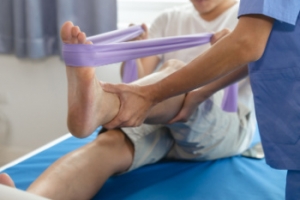

Drop foot makes it difficult to lift the front part of the foot, which can cause tripping or an unusual walking pattern. Exercises for drop foot that focus on strengthening the muscles along the front of the lower leg can help improve movement and control. Simple stretches of the ankle, done while sitting or standing, can loosen stiffness and make the foot move more freely. Toe raises, where you lift the front of your foot while keeping your heel on the ground, are often helpful. Using a band to pull your foot upward against resistance can also build strength. Walking on your heels is another way to train the foot to lift properly during each step. These movements support better balance and reduce the chance of stumbling when you take a step. A podiatrist can check the muscle strength in your leg and foot, look for problems with alignment, and recommend safe exercises. If you have symptoms of drop foot, it is suggested that you make an appointment with a podiatrist for an exam, diagnosis, and treatment, which may include a series of exercises.
Exercising your feet regularly with the proper foot wear is a great way to prevent injuries and build strength. If you have any concerns about your feet, contact one of our podiatrists from Community Podiatry Group. Our doctors can provide the care you need to keep you pain-free and on your feet.
Exercise for Your Feet
Exercise for your feet can help you gain strength, mobility and flexibility in your feet. They say that strengthening your feet can be just as rewarding as strengthening another part of the body. Your feet are very important, and we often forget about them in our daily tasks. But it is because of our feet that are we able to get going and do what we need to. For those of us fortunate enough to not have any foot problems, it is an important gesture to take care of them to ensure good health in the long run.
Some foot health exercises can include ankle pumps, tip-toeing, toe rises, lifting off the floor doing reps and sets, and flexing the toes. It is best to speak with Our doctors to determine an appropriate regimen for your needs. Everyone’s needs and bodies are different, and the activities required to maintain strength in the feet vary from individual to individual.
Once you get into a routine of doing regular exercise, you may notice a difference in your feet and how strong they may become.
If you have any questions, please feel free to contact our office located in Flint, MI . We offer the newest diagnostic and treatment technologies for all your foot care needs.
Foot and ankle pain can be a nuisance in a person’s life, especially if it happens frequently. The best way to prevent this type of pain, is to exercise often. Regular exercise of the foot includes stretching and strength exercises. Stretching exercises can help prevent injuries such as a sprained ankle, while strength exercises can prevent ailments such as plantar fasciitis.
Stretching exercises can help improve flexibility and the foot and ankle’s range of motion. These exercises can certainly help with those who participate in high-energy activities such as sports. Many athletes routinely perform foot and ankle exercises to prevent injuries like sprained ankles, which are common injuries where the tendons in the ankle are over stretched. Strength exercises help develop foot muscles for better support and protection.
Most exercises are simple and can be done at home, either standing or sitting. One chair exercise is called “limber up”. In this exercise, a person would start by sitting down with their feet flat on the floor. Then lift one leg up so the feet are not touching the floor, then rotate your foot clockwise 15-20 times, and 15-20 times counterclockwise. Repeat the same process with the opposite leg. Another sitting exercise helps stretch the back of your heel and requires an exercise band. It begins by looping the band around a heavy piece of furniture, or something stable that will not be moved when the band is tugged or pulled. Then sit directly in front of it, and slide one foot into the loop, so that the band curves around the forefoot. Start by pulling the forefoot back and holding it for 5-10 seconds. Doing this 10-15 times on each foot, will stretch the back of your heel, increasing your flexibility.
Foot exercises that require standing are also just as easy and simple. Referred as the “Achilles Stretch”, this exercise stretches the Achilles tendon, making it more flexible, helping prevent foot, ankle, and leg pain. It begins by first standing and facing the wall, with the arms outstretched and the palms on the wall. Then place one foot behind another keeping the back leg straight, and the forward leg bending at the knee. Make sure both heels are flat on the floor and adjust your stance accordingly. With your hips, lean forward to feel the stretch, you can also adjust the distance from your feet to feel the stretch in various parts of the calf. Make sure to hold the stretch for about 30 seconds and repeat the same process 3 times with each leg. An even easier foot exercise is simply walking on sand. Walking barefoot on sand both strengthens and stretches your feet.
Doing these exercises regularly can help prevent many foot and ankle problems. Other foot exercises can even relieve pain. For example, those affected with plantar fasciitis can simply sit down on a chair, and then place a tennis ball below their affected foot. By rolling the ball under the foot, and increasing or decreasing pressure, pain will be relieved. With any exercise, it is always important to do a small warmup such as walking a few laps around the house to get the blood flowing. If after doing an exercise to relieve pain such as the tennis ball exercise, or are unsure that your execution is correct, be sure to contact a podiatrist for further instruction.
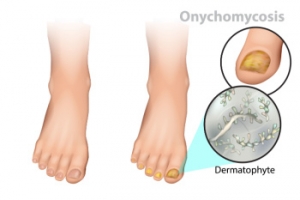

Fungal toenails, also referred to as ringworm of the nails or tinea pedis, often begin quietly, with a nail that looks a little dull or slightly yellow. Over time, the change becomes more obvious as the nail thickens, turns brittle, and sometimes gives off an unpleasant odor. The surface may appear rough or crumbly, and in advanced cases the nail can separate from the skin beneath it. These infections are stubborn because fungi thrive in warm, damp spaces such as inside shoes or socks worn for long hours. Age, reduced circulation, and frequent exposure to public showers or locker rooms can all increase risk. While many try home remedies, the condition rarely resolves without professional care. Ignoring it can lead to discomfort and difficulty wearing shoes. If you notice changes in your toenails that will not improve, it is suggested that you see a podiatrist for treatment.
For more information about treatment, contact one of our podiatrists of Community Podiatry Group. Our doctors can provide the care you need to keep you pain-free and on your feet.
Toenail Fungus Treatment
Toenail fungus is a condition that affects many people and can be especially hard to get rid of. Fortunately, there are several methods to go about treating and avoiding it.
Antifungals & Deterrence
Oral antifungal medicine has been shown to be effective in many cases. It is important to consult with a podiatrist to determine the proper regiment for you, or potentially explore other options.
Applying foot powder on the feet and shoes helps keep the feet free of moisture and sweat.
Sandals or open toed shoes – Wearing these will allow air movement and help keep feet dry. They also expose your feet to light, which fungus cannot tolerate. Socks with moisture wicking material also help as well.
If you have any questions please contact our office located in Flint, MI . We offer the newest diagnostic and treatment technologies for all your foot and ankle needs.
Toenail fungus is a frustrating problem that affects many people. It can be persistent and hard to get rid of. As many different types of fungi are present throughout the environment, it is very easy to contract toenail fungus.
The feet are especially susceptible to toenail fungus because shoes and socks create the ideal dark and moist environment that fungal infections thrive in. While fungal infections of the nail plate are quite common, if left untreated they can spread beyond the toenail and into the skin and other parts of the body.
Signs of toenail fungus include a thickened nail that has become yellow or brown in color, a foul smell, and debris beneath the nail. The toe may become painful due to the pressure of a thicker nail or the buildup of debris.
Treatment for toenail fungus is most effective during the early stages of an infection. If there is an accumulation of debris beneath the nail plate, an ingrown nail or a more serious infection can occur. While each treatment varies between patients, your podiatrist may prescribe you oral medications, topical liquids and creams, or laser therapy. To determine the best treatment process for you, be sure to visit your podiatrist at the first signs of toenail fungus.
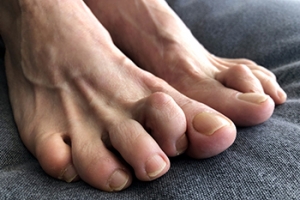

Crooked toes are a problem that often develops gradually. They may be caused by wearing shoes that squeeze the toes, arthritis that affects joint alignment, or structural issues such as flat feet or high arches. Injuries and muscle imbalances can also contribute, especially when tendons and ligaments no longer hold the toes in their normal position. Conditions like hammertoes, claw toes, and mallet toes are all examples of crooked toe deformities. Treatment depends on the severity. In the early stages, wearing wider shoes, using protective padding, and adding custom orthotics can ease pressure and slow progression. Stretching and strengthening exercises may also help maintain flexibility. If pain and deformity worsen, surgical options can realign the toes and relieve discomfort. If you have painful crooked toes, it is suggested that you see a podiatrist for a proper diagnosis and appropriate treatment.
Hammertoes can be a painful condition to live with. For more information, contact one of our podiatrists of Community Podiatry Group. Our doctors will answer any of your foot- and ankle-related questions.
Hammertoe
Hammertoe is a foot deformity that occurs due to an imbalance in the muscles, tendons, or ligaments that normally hold the toe straight. It can be caused by the type of shoes you wear, your foot structure, trauma, and certain disease processes.
Symptoms
Risk Factors
Treatment
If you have hammertoe, you should change into a more comfortable shoe that provides enough room for your toes. Exercises such as picking up marbles may strengthen and stretch your toe muscles. Nevertheless, it is important to seek assistance from a podiatrist in order to determine the severity of your hammertoe and see which treatment option will work best for you.
If you have any questions, please feel free to contact our office located in Flint, MI . We offer the newest diagnostic and treatment technologies for all your foot care needs.